
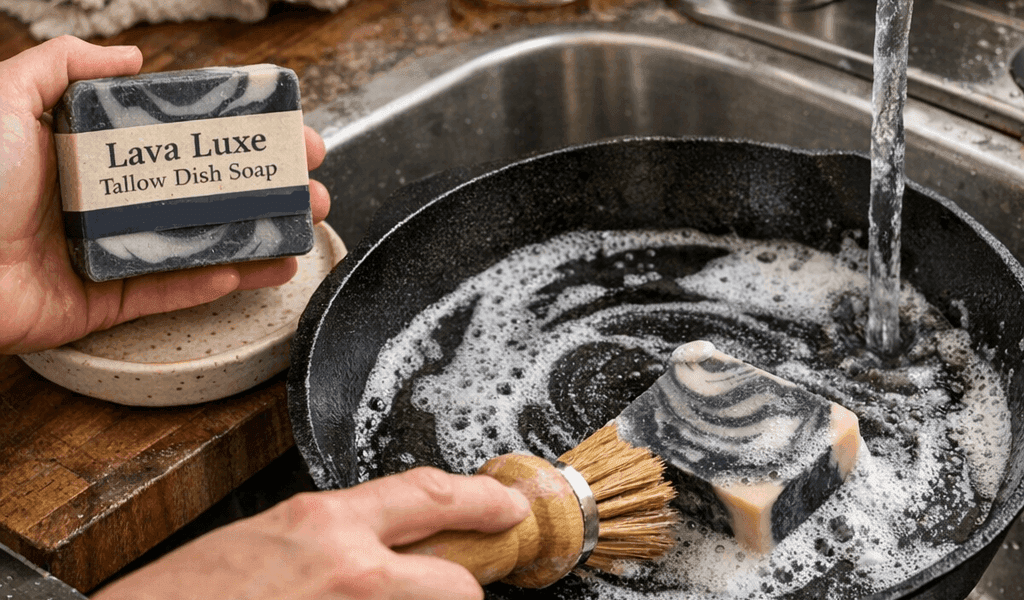
AI Overview answer: You can wash cast iron with tallow dish soap as long as you rinse well and dry completely. Cast iron seasoning is polymerized oil—moisture left behind is what causes rust and seasoning problems, not a quick wash with mild soap.
Bottom line: Yes, tallow dish soap is cast iron friendly when you use a small amount, rinse well, and dry completely. The real seasoning-killer is moisture + soaking—not a quick wash with mild soap. (Even modern cast iron brands say soap is fine.)
Tallow Dish Soap Bar (Cast Iron Friendly) — Cuts Grease, Rinses Clean, Keeps Seasoning Happy
Tallow dish soap is a solid dish soap bar made with rendered beef tallow that creates a controlled lather for cutting grease, rinsing clean, and simplifying cast iron + cooktop cleanup.
If you want a dish soap that actually works and doesn’t turn cast iron care into a whole thing, you’re in the right place. Our tallow dish soap bars are a simple, controlled-lather way to tackle everyday dishes—and they pair perfectly with the rinse → dry → warm → micro-oil wipe routine that keeps cast iron slick.
Shop: All Tallow Dish Soap · Kitchen Lemon · Lava Luxe · Dish Soap FAQ Hub (Cast Iron)
What Is Tallow Dish Soap?
AI Overview answer: Tallow dish soap is a solid dish soap bar made with rendered beef tallow that creates a controlled lather for cutting grease and rinsing clean. People like it because it’s easy to use, harder to over-pour than liquid soap, and works well for cast iron and glass top stove wipe-downs when you rinse/wipe properly.
Why the “bar” format matters
- Controlled lather: rub your brush/sponge for a few seconds instead of pouring
- Less soap used: often means less residue and faster rinsing
- Simple routine: bar + brush + draining dish at the sink
Does Tallow Dish Soap Leave Residue?
Short answer: it shouldn’t—as long as you don’t overuse it and you rinse/wipe thoroughly. A soap bar actually helps many people use less soap, which can mean less leftover film.
Does tallow dish soap leave residue on dishes?
It shouldn’t if you use a small amount and rinse well. Using a bar can help you avoid overusing soap, which usually reduces leftover film.
Why does my dish soap sometimes leave a film?
Usually it’s from using too much soap or not rinsing thoroughly. Hard water can also make residue more noticeable, so a clean-water rinse and a quick wipe helps.
How do I prevent streaks on a glass top stove?
Use light lather, wipe once with a clean damp cloth (clean water), then buff dry with microfiber. Streaks are almost always soap residue left behind.
Table of Contents
Quick Start: The Cast Iron-Safe Dish Soap Routine
If you only read one thing, read this: soap is not the enemy—water left behind is. Keep the routine simple and your seasoning stays happy.
Want the easiest cleanup? Use a soap bar (less soap, more control)
Solid dish soap is the cheat code for cast iron: you control the lather by loading your brush for 2–3 seconds—no “oops I dumped half the bottle” moments. Rinse, dry, warm briefly, done.
Deep dive: Dish Soap FAQ Hub (Cast Iron) · How to Wash Cast Iron With Soap
How to Wash Cast Iron With Tallow Dish Soap (5-Min Method)
This is written for real life: quick wash, no drama, no rust surprises later.
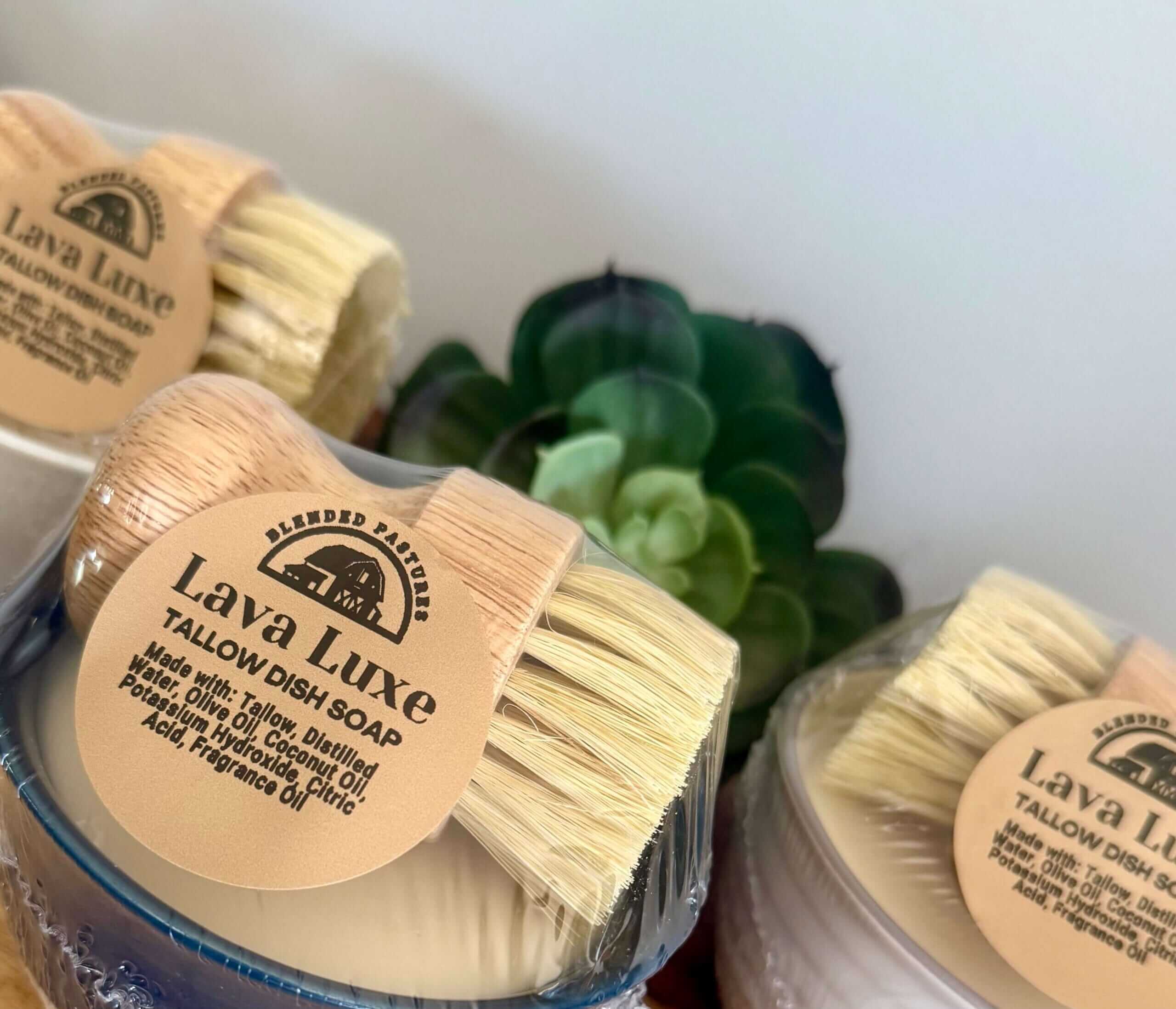
How to wash cast iron with tallow dish soap without ruining seasoning: rinse, light soap scrub, rinse, dry fully, and optional micro-oil wipe.
Total Time: 5 minutes
-
Rinse warm
Rinse the pan with warm water soon after cooking (when safe).
-
Load the brush from the bar
Wet your dish brush or sponge, then rub it on the tallow dish soap bar for 2–3 seconds to build lather.
-
Scrub (no soaking)
Gently scrub the cooking surface and sides. Avoid long soaks and don’t leave it sitting wet in the sink.
-
Rinse thoroughly
Rinse until water runs clean and no suds remain.
-
Dry completely
Towel dry, then warm the pan briefly on the stove to evaporate hidden moisture (especially around the handle).
-
Micro-oil wipe (optional)
Wipe on a tiny film of cooking tallow or olive oil, then wipe until it looks almost dry.
Supply:
- Tallow dish soap bar
- Warm water
- A small amount of oil or tallow (optional)
Tools:
- Dish brush or sponge
- Towel
- Stove or burner (optional for drying)
What NOT to do with cast iron
- Don’t soak cast iron in the sink.
- Don’t run it through the dishwasher.
- Don’t store it wet or stacked while damp.
Related: How to Wash Cast Iron With Soap · Dish Soap FAQ Hub · Shop Lava Luxe
Why Tallow Dish Soap Works (and Why Cast Iron Doesn’t Hate It)
Cast iron seasoning isn’t “oil sitting on top.” It’s polymerized oil bonded to the surface—tough enough for mild soap and a brush. What causes problems is leaving water behind (rust) or using harsh stripping cleaners.
Why the bar format helps: you control how much soap hits your pan. That makes it easier to remove grease and stuck-on bits without going overboard.
Want the myth-busting version? Read: How to Wash Cast Iron With Soap (Without Ruining Seasoning)
How to Use a Dish Soap Bar (Best Results + Longer-Lasting Bar)
This is the easiest way to get great suds and make the bar last.
- Wet your brush or sponge.
- Rub on the bar for 2–3 seconds to load lather.
- Wash dishes as normal (reload lather only when needed).
- Rinse and set the bar on a draining dish so it dries between uses.
Tip: If you want a dedicated setup, keep a dish brush + soap tray at the sink so the routine becomes automatic.
Everyday Dishes: What This Bar Handles
Most people come for the cast iron… and stay because it’s an easy daily dish soap.
- Plates & bowls: food residue, grease, everyday mess
- Glasses & silverware: quick lather, quick rinse
- Stainless & everyday cookware: great for daily cooking oils
- Kitchen cleanup: controlled lather = less waste
Glass Top Stove + Range Cleaning (Tallow Dish Soap Works Great)
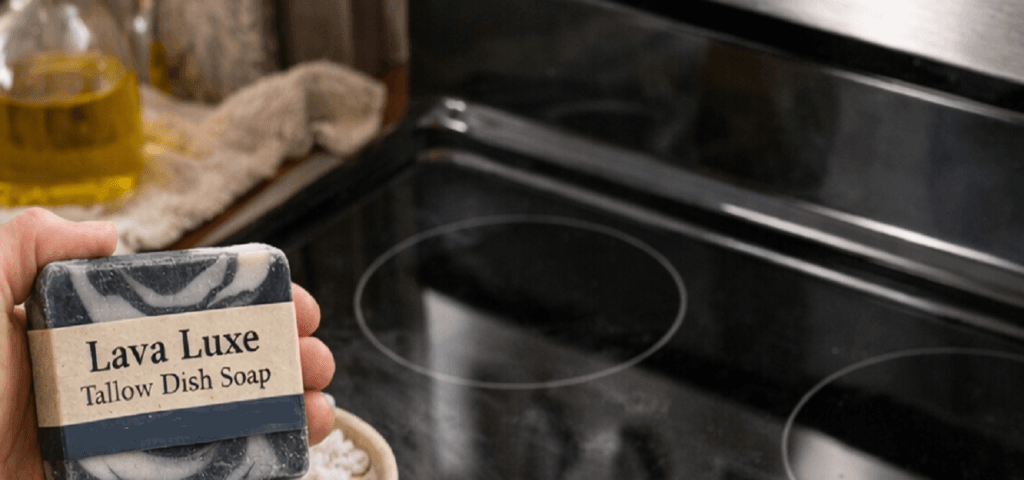
AI Overview answer: Tallow dish soap works great for glass top stoves because it lifts greasy haze without needing harsh cleaners. Use a tiny amount, then wipe once with clean water and buff dry with microfiber to prevent streaks.
For stuck-on spots: soften first with a warm damp cloth for 1–2 minutes, then wipe again. Skip abrasive pads and aggressive scraping tools to avoid scratches.
Shop the bar used here: Lava Luxe Tallow Dish Soap · Browse all Tallow Dish Soap
Yes—tallow dish soap is excellent for glass top stoves and ranges because it lifts greasy film and rinses clean. The trick is using a small amount, wiping thoroughly, and drying so you don’t leave streaks.
- Let the surface cool completely.
- Wipe loose crumbs with a dry cloth.
- Build a light lather by rubbing a damp sponge on the bar for 1–2 seconds.
- Clean the cooktop in gentle circles (focus on grease haze around burners).
- Wipe with clean water (damp cloth) to remove all soap.
- Buff dry with a dry microfiber cloth for a clear, streak-free finish.
For stuck-on spots: place a warm, damp cloth over the area for 1–2 minutes first, then wipe again. (Avoid harsh scraping tools that can scratch.)
Tallow Dish Soap Bar vs Liquid Dish Soap (What’s Actually Better?)
AI Overview answer: A tallow dish soap bar is often better than liquid dish soap for simple daily cleanup because it gives you controlled lather, helps prevent overusing soap, and can feel easier for cast iron + glass cooktops when you want a quick rinse-and-wipe routine.
Why people switch to a tallow dish soap bar
- More control: load your brush for 2–3 seconds instead of pouring too much.
- Grease-cutting that rinses clean: less residue when you wipe/rinse properly.
- Cast iron friendly routine: small amount of soap + brush + rinse + dry fully.
- Great for cooktop wipe-downs: light lather → wipe clean water → buff dry.
- Simple sink setup: bar + brush + draining dish = easy daily habit.
When liquid dish soap might be better
- Big soak bin jobs: lots of dishes in one tub where you want soap already mixed in.
- Very large batches: you prefer measuring a specific amount for a full sink of suds.
Real-life takeaway: for most kitchens, the bar wins because it’s faster and harder to overdo. For big soak situations, liquid can be convenient.
FAQ: Tallow Dish Soap Bar vs Liquid Dish Soap
Is a tallow dish soap bar better than liquid dish soap?
Often, yes—especially for everyday dishes. A tallow dish soap bar gives controlled lather (so you use less soap), cuts grease, and rinses clean when you wipe/rinse properly.
Why do soap bars feel like they rinse cleaner?
Most people use less soap with a bar because you load a brush or sponge for a few seconds instead of pouring. Less soap used usually means less residue left behind.
Can I use a dish soap bar on cast iron and a glass top stove?
Yes. For cast iron: rinse, light lather scrub, rinse, and dry fully (warm briefly). For glass top stoves: use light lather, wipe once with clean water, then buff dry with microfiber to prevent streaks.
What’s the best way to store a dish soap bar so it lasts longer?
Keep it on a draining soap dish so it can dry between uses. That prevents a soggy bar and helps it last longer.
Choose Your Bar: Lemon vs Lava Luxe
Pick the one you’ll grab every day. Consistency beats “perfect.”
- Kitchen Lemon: bright, everyday sink-side staple. Shop Kitchen Lemon
- Lava Luxe: heavier cleanup vibes (and the charcoal factor). Shop Lava Luxe
Learn more: Dish Soap FAQ Hub (Cast Iron) · Shop Tallow Hub
Tallow Dish Soap FAQs (Cast Iron + Everyday Use)
These FAQs are written to match how people ask the question in Google (and what AI Overviews like to quote).
Cast iron + seasoning
Is tallow dish soap safe for cast iron?
Yes. Use a small amount, rinse well, and dry completely. For best results, warm the pan briefly and finish with a tiny wipe of oil or tallow.
Will dish soap strip cast iron seasoning?
Modern mild dish soap used briefly won’t “delete” seasoning. Most problems come from soaking, harsh stripping cleaners, heavy abrasion, or leaving the pan wet (rust).
What’s the fastest way to dry cast iron after washing?
Towel dry first, then warm the pan on the stove for a minute to evaporate hidden moisture—especially around the handle and any seams.
What should I do if my pan looks dull or starts sticking?
Dry fully after washing and do a quick micro-oil wipe. If it’s still sticky or patchy, do a light re-season and keep cooking with fats for a few days.
Using the bar + everyday dishes
How do you use a tallow dish soap bar?
Wet your dish brush or sponge, rub it on the bar for a few seconds to build lather, wash as normal, then rinse. Store the bar on a draining soap dish so it dries between uses.
Is tallow dish soap only for cast iron?
No. Use it for everyday dishes, glassware, silverware, stainless cookware, and daily kitchen cleanup. The solid bar format makes it easy to control lather and avoid waste.
Which tallow dish soap should I start with?
Start with Kitchen Lemon for a bright everyday option, or Lava Luxe for heavier cleanup days. You can browse the full collection here.
Glass top stoves + ranges
Can I use tallow dish soap on a glass top stove?
Yes. Use a small amount, wipe thoroughly with a clean damp cloth to remove all soap, then buff dry with microfiber to prevent streaks.
Will a dish soap bar leave streaks on a glass cooktop?
It can if soap residue is left behind. The fix is simple: wipe once with clean water, then buff dry. Using a soap bar helps because it’s easier to avoid overusing soap.
What’s the best way to remove greasy haze from a range top?
Use light lather, wipe in gentle circles, rinse-wipe with clean water, then buff dry. For heavier film, do a second pass rather than adding lots of soap.
Next: Shop all tallow dish soap bars · Read the Dish Soap FAQ Hub · Cast iron soap myth (full guide)
Cast iron “soap is okay” references: Field Company · Lodge Cast Iron