
Tallow Dish Soap FAQ
Curious about tallow dish soap? This guide answers the questions shoppers ask most—what it is, how to use it, whether it works on cast iron, how it handles grease, what to expect in hard water, and which bar to start with for a better kitchen routine.
At Blended Pastures Farmstead, we make farm-made tallow dish soap in small batches with straightforward ingredients and practical kitchen use in mind. If you want a more traditional, hard-working dish soap for everyday dishes, cookware, and cast iron, this is a strong place to start.
Want the full walkthrough? Read our How to Wash Cast Iron With Soap guide for practical sink-to-stove care and help getting the best results from a dish soap bar.
Shop by format: Kitchen Lemon Dish Soap • Lava Luxe Dish Soap • Shop All Dish Soap • Tallow Soap FAQ
Start Here: Which Tallow Dish Soap Option Fits You Best?
Different bars fit different kitchen habits. Start with the kind of cleanup you do most often—everyday dishes, heavier cookware, cast iron care, or a broader comparison before you buy.
Kitchen Lemon Dish Soap
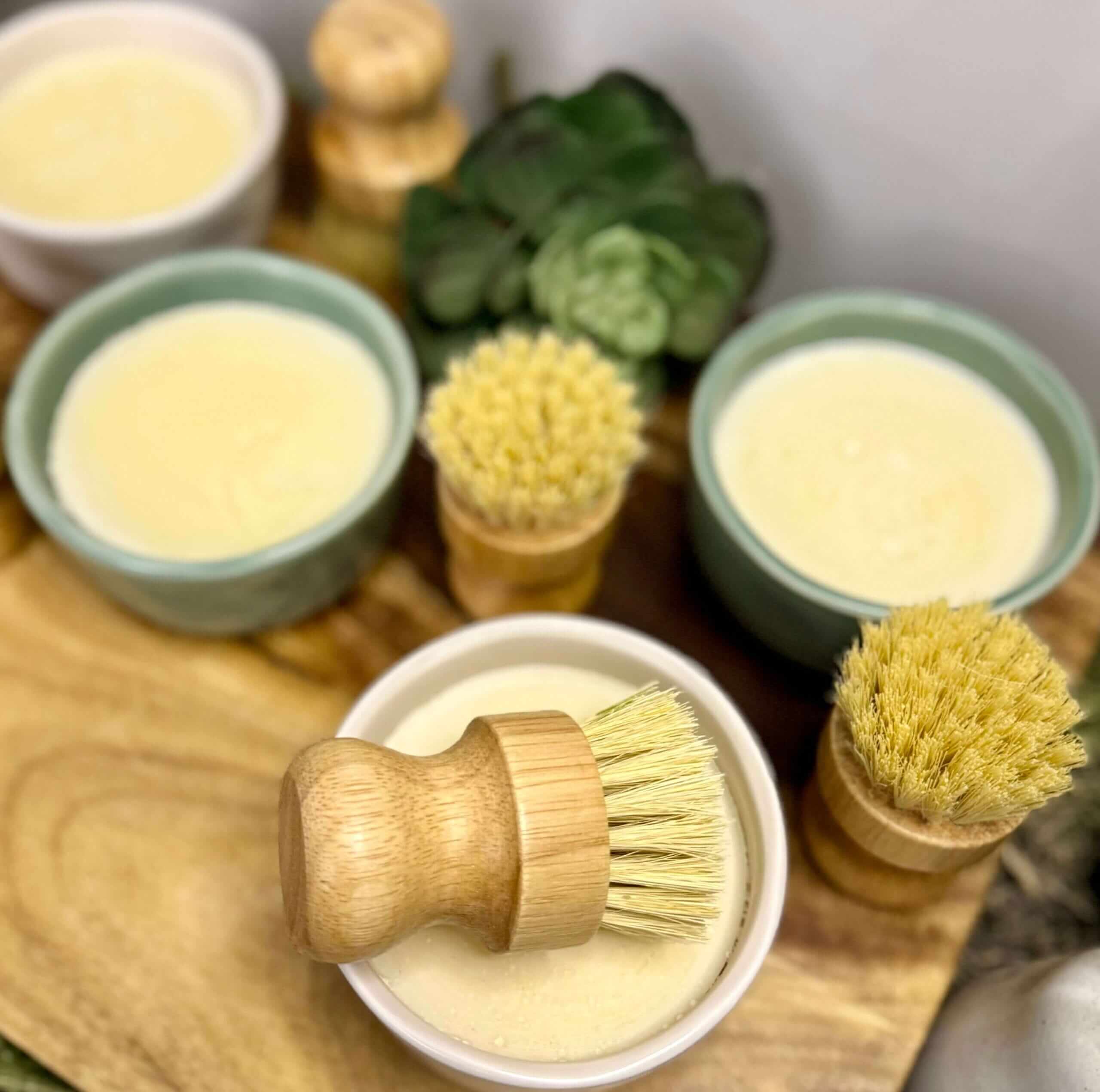
Best for: first-time buyers and everyday kitchen use
Feel: fresh, practical, dependable, and easy to live with at the sink
Lava Luxe Dish Soap
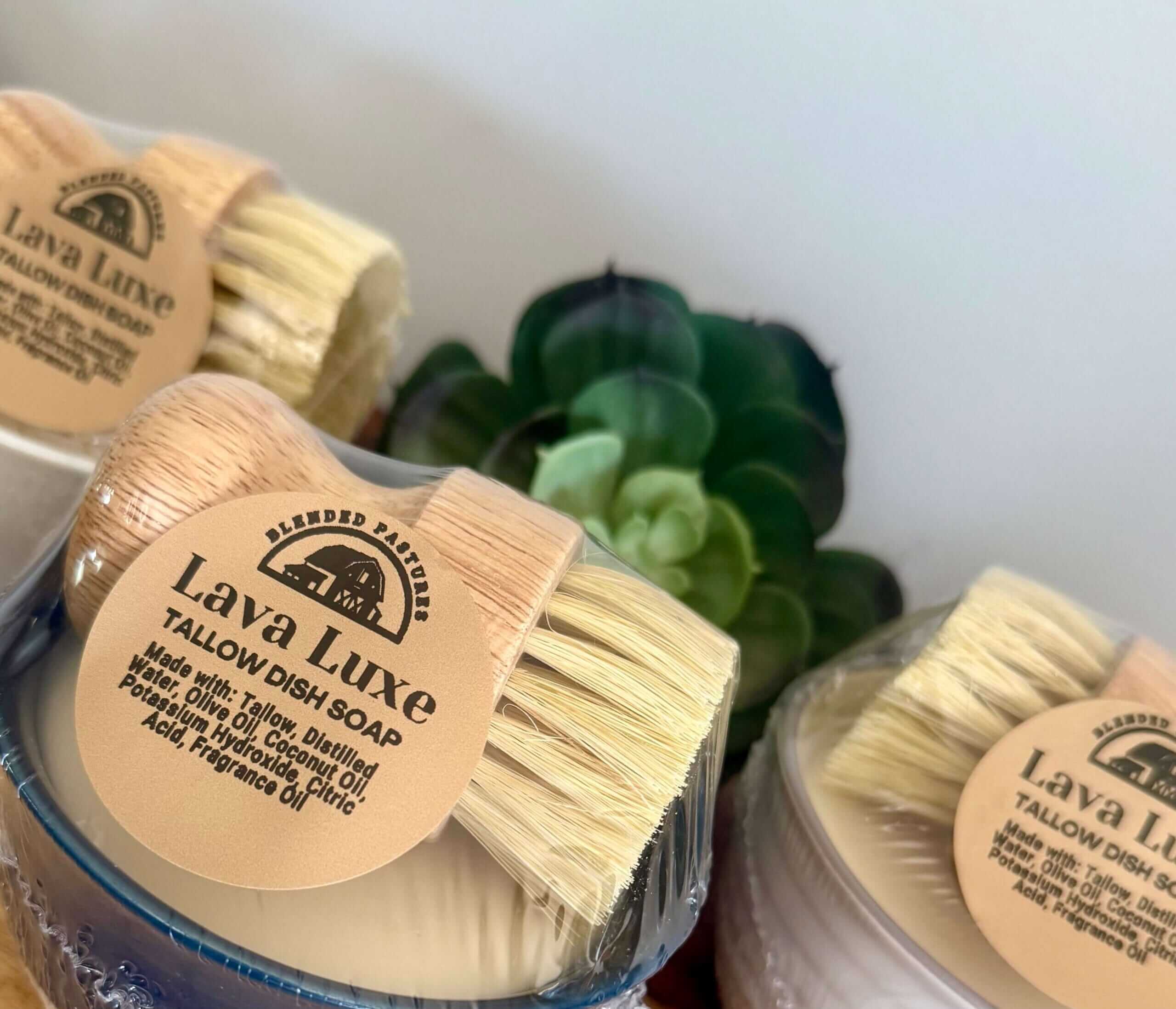
Best for: heavier residue, bigger messes, and tougher cleanup
Feel: hardworking, sturdy, and built for kitchens that put soap to work
Cast Iron Use
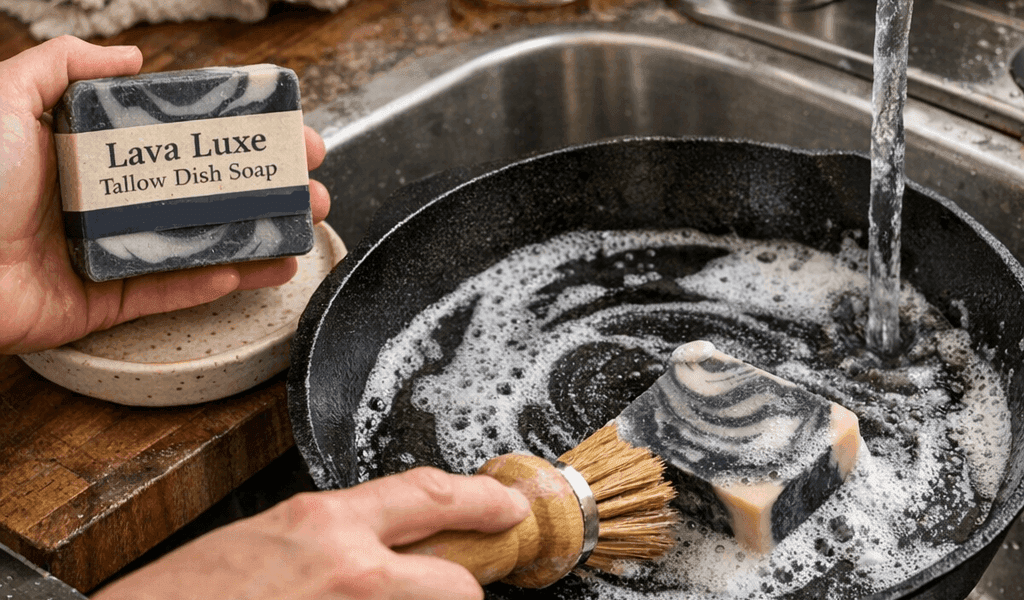
Best for: shoppers mainly asking about cast iron cleaning
Feel: simple, traditional, and easy to stick with once you know the routine
Compare the Full Line
Best for: shoppers who want to compare before they buy
Feel: broad view, easy decision-making, and less guesswork
Still not sure where to begin? Start with Kitchen Lemon Dish Soap for the easiest first order, or visit Shop Tallow Dish Soap Bars for a broader look at the full line.
Farm-Made
Made with a farmstead mindset and practical kitchen purpose.
Small-Batch
Prepared in smaller batches with consistency and care.
Simple Ingredients
Clear ingredient choices and a more straightforward sink routine.
Cast Iron Friendly
A practical option for skillets, pans, and everyday kitchen cleanup.
Quick Links
What it is + why people use it
Tallow dish soap appeals to shoppers who want a practical, traditional kitchen soap with rich lather, controlled use, and less routine clutter at the sink. It is especially appealing to people who want a natural dish soap bar that feels hardworking, dependable, and easy to keep beside everyday dishes and cookware.
What is tallow dish soap?
Tallow dish soap is a solid dish soap made with beef tallow as part of the soap base. Many shoppers choose it because they want a practical bar soap for dishes, cookware, and cast iron-friendly kitchen cleanup.
Why do people use tallow dish soap?
People often choose tallow dish soap when they want a more straightforward sink routine, rich lather, controlled soap use, and a more traditional alternative to liquid dish soap. It is especially popular with shoppers looking for a natural dish soap bar that feels simple and effective.
Is tallow dish soap good for everyday dishes?
Yes. Many households use tallow dish soap bars for everyday dishes, utensils, pots, pans, and routine kitchen cleanup. It is a strong fit for shoppers who want one hard-working bar beside the sink instead of another bottle to squeeze and replace.
Want the bigger picture? Start here: Ingredient Standards, Shop Tallow Hub, and Shop Tallow Dish Soap Bars.
Cast iron + everyday use
This is one of the biggest buying questions, so keep it simple: if you use tallow dish soap normally, rinse well, dry fully, and maintain seasoning as usual, it can be a very practical choice for cast iron households.
Is tallow dish soap safe for cast iron?
Yes. Tallow dish soap can be a practical option for routine cast iron washing. The key is to rinse well, dry thoroughly, and care for your seasoning the usual way after cleaning.
Will tallow dish soap strip cast iron seasoning?
Used normally, it should not strip a well-seasoned pan. The biggest keys are avoiding long soaks, rinsing thoroughly, drying completely, and re-oiling lightly if your routine calls for it.
Can I use a tallow dish soap bar on everyday cookware too?
Yes. Tallow dish soap bars are commonly used on everyday dishes, stainless steel, enamel, glass, and routine cookware. For nonstick pans, use a softer sponge or brush and avoid abrasive scrubbing.
What is the best tallow dish soap to start with?
Most first-time buyers should start with Kitchen Lemon Dish Soap. It is the easiest all-around recommendation for everyday dishes, cast iron-friendly washing, and a clean, practical kitchen routine.
Mainly shopping for cast iron use? Start with Kitchen Lemon Dish Soap, then read How to Wash Cast Iron With Soap for the full routine.
Grease, rinsing, and hard water
These are the make-or-break questions for most buyers. The good news is that a well-used dish soap bar can handle everyday grease well, but technique matters more than people expect—warm water, enough lather, and a proper rinse make a big difference.
Does tallow dish soap cut grease?
Yes. Tallow dish soap can handle everyday grease and routine kitchen messes well, especially with warm water and a good brush or sponge. For heavier residue or cooked-on messes, a little extra lather and scrubbing helps.
Does tallow dish soap rinse clean?
It should rinse clean with enough water and a thorough rinse. If your water is harder, using warmer water and rinsing a little longer usually improves the result.
Does tallow dish soap work in hard water?
Yes, but hard water can reduce lather and make rinsing take a bit longer. Using warm water, building more lather, and letting the bar dry fully between uses helps it perform better over time.
Can a tallow dish soap bar replace liquid dish soap?
Yes. Many shoppers use a tallow dish soap bar as their main dish soap for handwashing dishes and cookware. If you are switching from liquid soap, it may take a wash or two to get used to how quickly a bar builds lather.
Want the easiest first pick? Go straight to Kitchen Lemon Dish Soap for an everyday bar that feels simple, useful, and easy to adopt.
Not Sure Where to Begin?
Start with a simple kitchen routine. These are the easiest starting points for first-time buyers who want less guesswork and a more straightforward way to shop dish soap.
Starter Pick #1
Kitchen Lemon Dish Soap
The best place to start if you want one practical bar for everyday dishes, cookware, and cast iron-friendly use.
Starter Pick #2
Lava Luxe Dish Soap
A solid choice if your kitchen deals with heavier pots, tougher residue, and cleanup that asks a little more from the bar.
Starter Pick #3
Cast Iron Routine
The right next step if your biggest hesitation is how to wash skillets, dry them well, and keep your seasoning in good shape.
Storage + bar longevity
Good storage helps your dish soap stay firmer, last longer, and perform better at the sink. This matters especially for a bar you want to use every day.
How long does a tallow dish soap bar last?
That depends on how often you wash dishes and how you store the bar. Letting it dry fully between uses usually helps it last much longer.
What is the best way to store a dish soap bar?
Use a soap dish that drains so the bar can dry between washes. Keeping it out of standing water is the easiest way to prevent mushiness and extend the life of the bar.
Is tallow dish soap septic safe?
In most households, traditional soap ingredients are commonly used with septic systems. If you have a sensitive or specially managed system, it is best to follow your provider’s guidance and use it like any other household soap product.
Want a bar that earns its place beside the sink? Start with Kitchen Lemon Dish Soap and pair it with a draining dish or sink-side tray so it stays firm between washes.
How to choose the right dish soap bar
Kitchen Lemon vs Lava Luxe — what’s the difference?
- Kitchen Lemon: best first order for everyday dishes, regular cookware, and a clean, practical sink routine.
- Lava Luxe: stronger-feeling option for kitchens dealing with heavier residue and tougher cleanup.
- Cast iron guide: the best next step if your main hesitation is how to wash, dry, and maintain seasoned pans correctly.
- Full collection: the right place to compare before buying if you want the broadest view of your options.
Which tallow dish soap should I start with?
If you want the easiest all-purpose option, start with Kitchen Lemon Dish Soap. If your kitchen deals with heavier messes and tougher cleanup, start with Lava Luxe Dish Soap. If your main concern is cast iron, follow the cast iron washing guide first, then choose your bar.
Where can I learn more about ingredients and how you make your products?
Start with Ingredient Standards and the Shop Tallow Hub for a broader overview of the farmstead line.
Where should I go next to shop?
Use Shop Tallow Dish Soap Bars for the full collection, go straight to Kitchen Lemon Dish Soap for the easiest first order, or use How to Wash Cast Iron With Soap if you want a guided path first.
Where should I go next?
Whether you want the easiest first dish soap order, a broader comparison, or a guided cast iron routine, these are the best next steps.
- Kitchen Lemon Dish Soap — best starting point
- Shop Tallow Dish Soap Bars — compare the full line
- How to Wash Cast Iron With Soap — guided steps for skillets and pans
- Ingredient Standards — learn more about the farmstead approach
- Visit The Farmstand — shop everything locally